
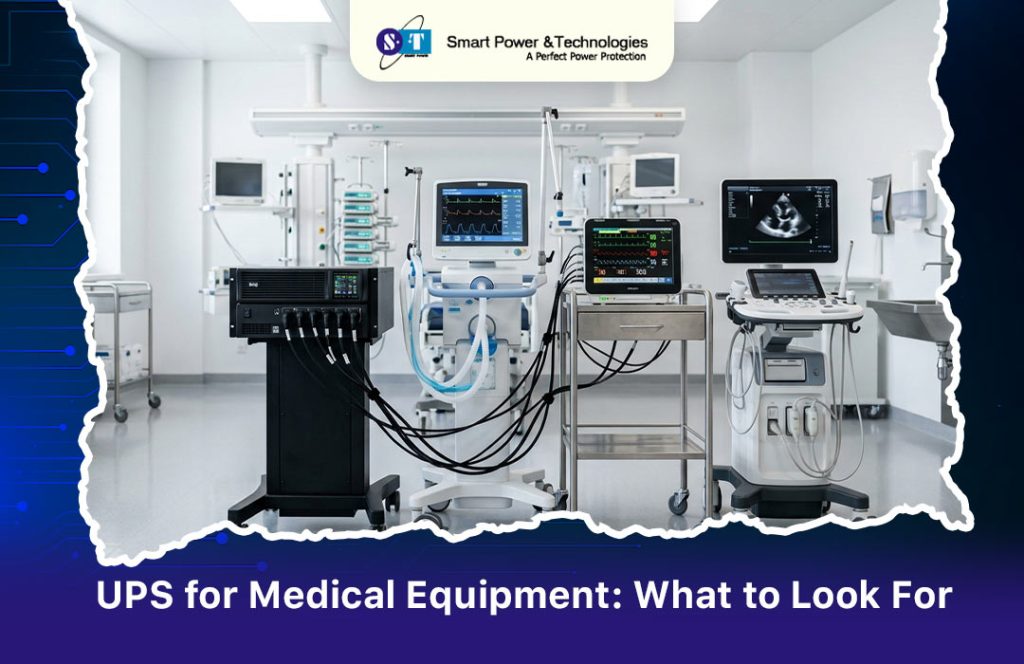
Medical equipment plays a critical role in saving lives and delivering quality healthcare. Whether it is used in hospitals, diagnostic centres, clinics, laboratories, or home healthcare environments, uninterrupted power is essential for maintaining operational efficiency and patient safety.
In Bangladesh, power outages and voltage fluctuations remain a concern in many areas. Even a few seconds of power interruption can affect sensitive medical devices and may lead to inaccurate readings, data loss, or equipment damage. This is why investing in the right Uninterruptible Power Supply (UPS) system is not just an option—it is a necessity.
If you are planning to buy a UPS for medical equipment, understanding the specifications, safety features, and capacity requirements is extremely important.
In this complete buying guide, we will explain everything you need to know before purchasing a medical-grade UPS system in Bangladesh.
What Is a UPS for Medical Equipment?
A UPS (Uninterruptible Power Supply) is a backup power system that provides electricity immediately when the main power source fails. Unlike generators, UPS systems deliver power instantly without any interruption.
Medical equipment UPS systems are designed to provide:
- Continuous power supply
- Voltage regulation
- Surge protection
- Battery backup during outages
- Protection against electrical fluctuations
- Safe shutdown capabilities
Medical devices often require stable power because even minor voltage variations can negatively impact their performance.
Why Medical Equipment Needs a UPS
Many healthcare facilities depend on sensitive medical devices that must remain operational at all times.
Examples include:
- Ultrasound machines
- ECG machines
- Patient monitors
- Ventilators
- Medical laboratory equipment
- CT scanners
- MRI systems
- Dialysis machines
- Blood analysers
- Dental equipment
- Surgical equipment
- Medical refrigerators
- Hospital networking systems
- Healthcare servers and data storage systems
A UPS protects these devices from:
- Power failures
- Voltage fluctuations
- Electrical noise
- Sudden shutdowns
- Data corruption
- Equipment damage
- Operational interruptions
Risks of Using Low-Quality UPS Systems
Many healthcare facilities make the mistake of choosing low-cost UPS systems without considering medical equipment requirements.
Poor-quality UPS systems may cause:
Overheating
Inadequate UPS systems can overheat under heavy loads.
Inconsistent Voltage
Voltage instability may damage expensive medical equipment.
Short Backup Time
Low-capacity UPS systems often fail to provide sufficient backup during emergencies.
Battery Failure
Inferior batteries degrade quickly and require frequent replacement.
Delayed Power Switching
Certain UPS technologies introduce delays when switching to battery mode.
Increased Maintenance Costs
Frequent repairs and replacements significantly increase operational costs.
Types of UPS Systems
There are three major UPS technologies available.
Offline UPS
Best for:
- Basic home devices
- Small electronics
Advantages:
- Affordable
- Easy installation
Disadvantages:
- Power transfer delay
- Limited protection
- Not recommended for critical medical applications
Line Interactive UPS
Best for:
- Small clinics
- Office equipment
Advantages:
- Better voltage regulation
- Improved efficiency
Disadvantages:
- Limited for highly sensitive medical devices
Online UPS
Best for:
- Hospitals
- Diagnostic centres
- Laboratories
- ICU units
- Medical imaging systems
Advantages:
- Zero transfer time
- Pure sine wave output
- Superior voltage regulation
- High reliability
- Advanced protection
Online UPS systems are considered the best choice for medical equipment because they continuously supply clean and stable power.
Why Online UPS Is Recommended for Medical Equipment
Healthcare environments cannot tolerate power interruptions.
Online UPS systems offer:
- Continuous power supply
- Double conversion technology
- Voltage regulation
- Frequency stabilization
- Noise filtration
- High reliability
- Better battery management
- Superior protection
Even if the utility power fluctuates or completely fails, online UPS systems continue supplying uninterrupted electricity.
Important Factors to Consider Before Buying a Medical UPS
1. UPS Capacity
The first thing to consider is the total power requirement.
Calculate:
- Voltage
- Wattage
- Total connected load
- Future expansion requirements
UPS capacities commonly include:
- 1 KVA
- 2 KVA
- 3 KVA
- 5 KVA
- 10 KVA
- 20 KVA
- 30 KVA
- 50 KVA
Large hospitals often require higher-capacity UPS systems.
2. Backup Time
Ask yourself:
- How long should the medical equipment continue operating during a power outage?
Backup requirements may vary:
| Application | Backup Requirement |
| Small Clinic | 15-30 Minutes |
| Diagnostic Centre | 30-60 Minutes |
| Hospital ICU | 1-2 Hours |
| Laboratory | 1 Hour+ |
| Medical Server Room | 1-3 Hours |
The battery bank size determines the total backup duration.
3. Pure Sine Wave Output
Medical equipment requires:
- Stable voltage
- Clean power output
Pure sine wave UPS systems provide:
- Better compatibility
- Increased efficiency
- Longer equipment lifespan
Avoid modified sine wave UPS systems for sensitive medical devices.
4. Voltage Regulation
Bangladesh frequently experiences:
- Low voltage
- High voltage
- Power fluctuations
A UPS with built-in voltage regulation protects equipment from:
- Voltage spikes
- Voltage drops
- Electrical instability
5. Scalability
Healthcare facilities grow over time.
Consider whether your UPS system supports:
- Additional batteries
- Increased load capacity
- Modular expansion
Choosing a scalable UPS helps reduce future upgrade costs.
6. Battery Type
UPS battery quality significantly affects performance.
Common battery options include:
- Sealed Lead Acid (SLA)
- Maintenance-Free Batteries
- Lithium-ion Batteries
Important considerations:
- Battery lifespan
- Charging time
- Maintenance requirements
- Replacement costs
7. Battery Monitoring System
Advanced UPS systems offer:
- Battery health monitoring
- Automatic diagnostics
- Low battery alerts
- Overcharging protection
These features improve operational reliability.
8. Efficiency Rating
Look for UPS systems that provide:
- High power efficiency
- Low heat generation
- Reduced electricity consumption
Benefits include:
- Lower operational costs
- Improved battery performance
- Longer service life
9. Safety Features
Medical UPS systems should include:
- Short circuit protection
- Overload protection
- Surge protection
- Temperature protection
- Battery protection
- Over-voltage protection
- Low-voltage protection
Safety features are essential in healthcare environments.
Medical Equipment That Requires Online UPS
Healthcare equipment that typically requires an Online UPS includes:
Diagnostic Equipment
- Ultrasound Machines
- ECG Machines
- EEG Machines
- Imaging Systems
Critical Care Equipment
- Ventilators
- Patient Monitors
- Infusion Pumps
- ICU Equipment
Laboratory Equipment
- Blood Analysers
- Medical Refrigerators
- Laboratory Machines
Dental Equipment
- Dental Chairs
- Imaging Systems
- Sterilization Equipment
IT Infrastructure
- Hospital Servers
- Medical Data Systems
- Networking Equipment
UPS Capacity Guide for Healthcare Facilities
| Healthcare Facility | Recommended UPS |
| Home Healthcare | 1 KVA |
| Small Clinic | 1-2 KVA |
| Dental Clinic | 2-3 KVA |
| Diagnostic Centre | 3-10 KVA |
| Hospital | 10-50 KVA |
| ICU Unit | 10 KVA+ |
| Laboratory | 3-10 KVA |
| Medical Server Room | 5-20 KVA |
The actual UPS size should always be calculated based on connected load requirements.
Why Voltage Fluctuation Is Dangerous for Medical Equipment
Power fluctuations may lead to:
- Equipment malfunction
- Data loss
- Sensor inaccuracies
- Premature component failure
- System shutdowns
Sensitive medical devices require a stable AC power supply to perform accurately.
UPS Maintenance Tips
Regular maintenance is important for reliable performance.
Monthly Checks
Inspect:
- Battery status
- Load percentage
- Alarm indicators
Quarterly Checks
Inspect:
- Battery connections
- Ventilation
- Cooling systems
Annual Maintenance
Perform:
- Battery testing
- Internal cleaning
- System diagnostics
- Capacity testing
Preventive maintenance reduces unexpected failures.
Healthcare Facilities That Need UPS Systems
UPS systems are ideal for:
- Hospitals
- Clinics
- Diagnostic Centres
- Medical Colleges
- Dental Clinics
- Laboratories
- Home Healthcare Providers
- Imaging Centres
- Research Institutions
- Pharmaceutical Facilities
Common Mistakes When Buying a Medical UPS
Avoid the following mistakes:
Choosing Based on Price Alone
Low-cost UPS systems may compromise reliability.
Ignoring Future Expansion
Always allow extra capacity for future equipment additions.
Selecting Incorrect Battery Backup
Backup time should match operational requirements.
Purchasing Offline UPS for Critical Equipment
Online UPS is the preferred choice for sensitive healthcare applications.
Ignoring Service Support
After-sales support is extremely important for healthcare facilities.
Why Buy UPS Systems from Smart Power Ltd?
Smart Power Ltd provides power backup solutions for residential, commercial, and industrial applications in Bangladesh. The company offers:
- Online UPS systems
- Offline UPS systems
- Industrial UPS solutions
- Voltage stabilizers
- Power backup solutions
- Technical support
- Installation services
- Maintenance services
Their UPS solutions are suitable for hospitals, clinics, diagnostic centres, laboratories, and other critical applications requiring uninterrupted power supply.
Frequently Asked Questions
Which UPS is best for medical equipment?
Online UPS systems are generally the best option because they provide uninterrupted and clean power.
How much backup time is required?
Backup requirements depend on the equipment and facility type. Hospitals often require longer backup durations.
Is voltage stabilization necessary?
Yes. Medical equipment is highly sensitive to voltage fluctuations and should always be protected.
Can one UPS support multiple medical devices?
Yes, provided the UPS capacity is properly calculated according to the total connected load.
Do clinics need an Online UPS?
Yes. Clinics that use sensitive diagnostic equipment should invest in an Online UPS system.
Final Thoughts
Medical equipment is a significant investment, and uninterrupted power is essential for ensuring patient safety and operational continuity. Choosing the right UPS involves understanding your equipment’s power requirements, backup needs, safety features, and future scalability.
For hospitals, clinics, diagnostic centres, and laboratories in Bangladesh, an Online UPS system remains one of the most reliable solutions for protecting sensitive medical devices from power disruptions and voltage instability. Investing in a quality UPS today can prevent costly downtime and equipment damage in the future.