
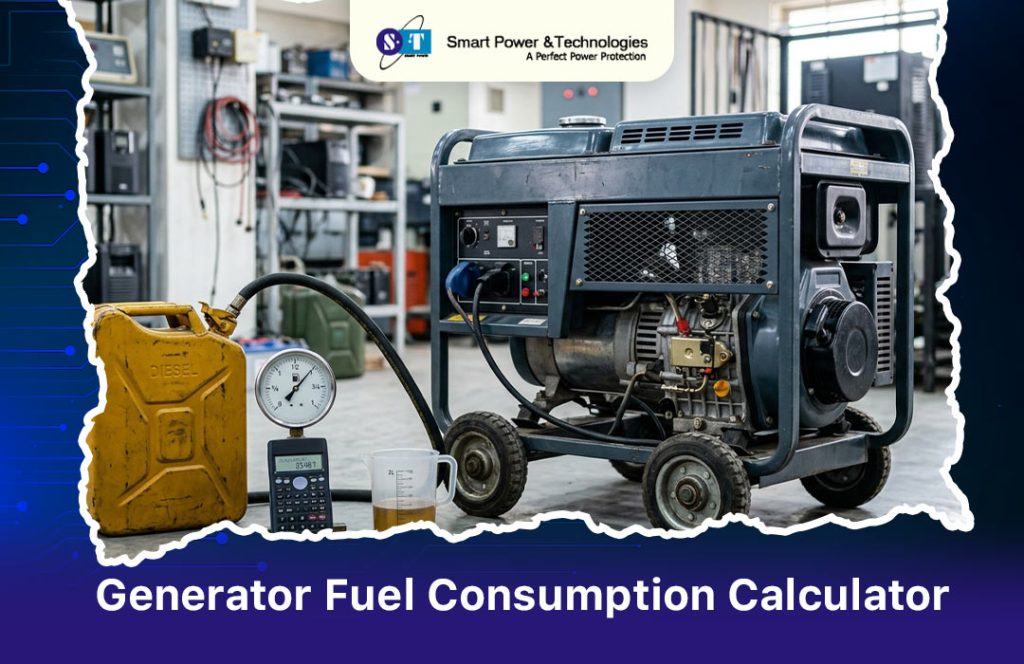
Generators have become a necessary part of daily life for homes, hospitals, offices, factories, and construction sites, especially in regions where power outages are common. Whether you rely on a generator as a backup power source or as your primary source of electricity, one question always comes up sooner or later: how much fuel will it actually consume. Understanding generator fuel consumption is not just about curiosity. It directly affects your budget, your planning, and your ability to keep essential equipment running without unexpected interruptions.
This is where a generator fuel consumption calculator becomes an essential tool. It allows you to estimate fuel usage accurately, plan fuel purchases in advance, and avoid the frustration of running out of fuel during a critical power outage. In this article, we will walk through everything you need to know about generator fuel consumption, how the calculation works, the factors that influence it, and practical tips to reduce fuel usage without compromising performance.
Why Fuel Consumption Matters So Much
Fuel is one of the biggest ongoing costs associated with operating a generator. Unlike the initial purchase price, which is a one-time expense, fuel costs accumulate every single time the generator runs. Over months and years, inefficient fuel usage can add up to a significant financial burden, particularly for businesses that depend on generators for extended hours or for households in areas with frequent load shedding.
Beyond cost, fuel consumption also affects planning. If you know how much fuel your generator uses per hour at a given load, you can calculate exactly how long a full tank will last. This is especially important for hospitals, clinics, and healthcare facilities where continuous power is a matter of patient safety, or for businesses where downtime translates directly into lost revenue.
Fuel consumption also has environmental implications. Generators that burn more fuel than necessary produce more emissions. Understanding and optimizing fuel usage is therefore not only a financial decision but also a responsible one from an environmental standpoint.
What Is a Generator Fuel Consumption Calculator
A generator fuel consumption calculator is a tool, either manual or digital, used to estimate how much fuel a generator will use over a specific period of time based on several key variables. These variables typically include the generator’s rated power output, the load percentage at which it is operating, the type of fuel used, and the generator’s overall efficiency rating.
Instead of guessing or relying on rough estimates, a proper calculator uses established formulas and manufacturer specifications to give you a reliable number. This number can then be used to plan fuel storage, budget for operational costs, and schedule refueling in advance.
Most calculators ask for a few basic inputs such as the generator’s kilowatt or kilovolt-ampere rating, the load factor as a percentage, and the number of hours you expect the generator to run. Based on these inputs, the calculator produces an estimate of liters or gallons of fuel required.
The Basic Formula Behind Fuel Consumption Calculations
While digital calculators simplify the process, it helps to understand the underlying formula so you can make sense of the numbers and even perform manual calculations when needed.
The general formula used for diesel generators is as follows:
Fuel Consumption (liters per hour) = Specific Fuel Consumption (liters per kWh) multiplied by Generator Output (kW)
Specific fuel consumption, often abbreviated as SFC, is a value provided by the generator manufacturer. It represents how many liters of fuel the engine burns to produce one kilowatt-hour of electricity. This value varies depending on the engine design, the load at which it is operating, and the overall condition of the generator.
For a rough estimate when manufacturer data is not available, many technicians use an approximate rule of thumb for diesel generators, which suggests that a generator consumes around 0.4 liters of diesel per kilowatt-hour of electricity produced at a typical load. This is only an approximation and actual consumption can vary based on the specific engine and operating conditions.
For gasoline generators, the consumption tends to be slightly higher per kilowatt-hour compared to diesel because gasoline engines are generally less fuel efficient. Natural gas generators, on the other hand, are measured differently, often in cubic feet or cubic meters of gas per hour rather than liters.
Key Factors That Influence Fuel Consumption
Several variables affect how much fuel a generator actually consumes in real-world conditions. Understanding these factors helps explain why two generators of the same rated capacity might use different amounts of fuel.
Generator Load Percentage
The load percentage refers to how much of the generator’s total capacity is actually being used at any given time. A generator running at full load consumes noticeably more fuel per hour than one running at a partial load, but it is important to understand that fuel consumption does not scale in a perfectly linear fashion with load.
Generators are generally most fuel efficient when operating between fifty and eighty percent of their rated capacity. Running a generator at very low loads for extended periods is actually inefficient because the engine still requires a baseline amount of fuel to keep running, regardless of how little electrical output is being drawn. This is sometimes referred to as wet stacking in diesel engines, where incomplete combustion at low loads can also cause long-term engine damage.
Type of Fuel Used
Different fuel types have different energy densities and combustion efficiencies. Diesel generators are widely regarded as more fuel efficient than gasoline generators for the same power output, which is one reason diesel generators are commonly used for industrial and commercial applications. Natural gas generators offer the advantage of a continuous fuel supply through pipelines, eliminating the need for on-site fuel storage, though their fuel efficiency profile is different from liquid fuel generators.
Generator Size and Engine Technology
Larger generators with more modern and efficient engine technology tend to have better fuel economy per kilowatt-hour compared to older or smaller units. Advances in engine design, including improved combustion chambers, turbocharging, and electronic fuel injection systems, have significantly improved fuel efficiency in newer generator models.
Ambient Temperature and Altitude
Environmental conditions also play a role. Generators operating in extremely hot or cold climates may experience changes in combustion efficiency. High altitude locations with thinner air can also affect engine performance and fuel consumption, since engines rely on adequate air intake for efficient combustion.
Maintenance Condition
A well-maintained generator with clean air filters, properly calibrated fuel injectors, and regular oil changes will consume fuel more efficiently than a poorly maintained one. Dirty filters restrict airflow, forcing the engine to work harder and burn more fuel to produce the same output. Regular servicing is one of the most effective ways to keep fuel consumption within expected ranges.
Altitude and Duration of Continuous Operation
Generators that run continuously for long stretches without rest periods may also experience gradual efficiency losses due to heat buildup, requiring more fuel to maintain consistent output compared to generators that operate in shorter, well-ventilated cycles.
How to Use a Generator Fuel Consumption Calculator Step by Step
Using a fuel consumption calculator effectively involves gathering a few pieces of information before you begin.
First, identify your generator’s rated capacity, usually listed in kilowatts or kilovolt-amperes on the nameplate or in the owner’s manual. Second, estimate the load percentage you expect to run, which depends on how many appliances or how much equipment you plan to power simultaneously. Third, determine the number of hours you expect the generator to operate, whether that is a few hours during a power outage or continuous operation over a full day.
Once you have these three inputs, you can either use an online calculator tool, a spreadsheet formula, or manual calculation using the specific fuel consumption value provided by your generator’s manufacturer.
For example, if you have a ten kilowatt diesel generator running at seventy five percent load for eight hours, you would first calculate the actual power output, which is seven point five kilowatts. Multiplying this by an approximate specific fuel consumption value gives you an estimated liters per hour figure, which you then multiply by the total operating hours to get your total fuel requirement for that period.
Practical Applications of Fuel Consumption Calculations
Understanding fuel consumption has real practical value across different settings.
For homeowners, calculating expected fuel usage helps determine how large a fuel tank or how many fuel containers to keep on hand for extended outages. This is particularly important in areas prone to storms, natural disasters, or unreliable grid infrastructure.
For businesses and industrial facilities, accurate fuel consumption estimates feed directly into operational budgeting. Facility managers can forecast monthly or annual fuel expenses, negotiate better fuel supply contracts, and identify when a generator might be operating inefficiently due to mechanical issues.
For construction sites and remote job locations, where generators often serve as the primary power source rather than backup power, fuel consumption calculations are critical for logistics planning. Knowing exactly how much fuel is needed helps avoid costly delays caused by running out of fuel in remote locations where refueling is not immediately convenient.
For rental generator companies, providing customers with accurate fuel consumption estimates builds trust and helps customers budget appropriately for their events or projects, whether that is a wedding, a festival, or a temporary construction project.
Tips to Reduce Generator Fuel Consumption
Reducing fuel consumption not only saves money but also extends the life of the generator and reduces environmental impact. Here are several practical strategies.
Operate the generator at an optimal load range, ideally between fifty and eighty percent of its rated capacity, rather than running it at very low loads for extended periods. If your typical power demand is much lower than your generator’s capacity, consider whether a smaller, more appropriately sized generator would serve your needs more efficiently.
Keep up with regular maintenance schedules, including air filter replacement, oil changes, and fuel system inspections. A generator in good mechanical condition will consistently use less fuel than one suffering from neglect.
Avoid unnecessary idling. If the generator is not actively needed, turn it off rather than letting it run without a load. Modern generators with automatic start and stop features can help manage this automatically based on demand.
Consider investing in a generator with automatic voltage regulation and modern electronic fuel injection, as these technologies are generally more fuel efficient compared to older carburetor based systems.
Use energy efficient appliances and equipment when relying on generator power. Reducing your overall electrical demand means the generator does not need to work as hard, which directly reduces fuel consumption.
Where possible, consider hybrid setups that combine generator power with solar power or battery storage systems. This can significantly reduce the number of hours the generator needs to run, thereby cutting overall fuel usage.
Common Mistakes to Avoid When Estimating Fuel Consumption
Many people make the mistake of assuming fuel consumption scales in a perfectly straight line with generator size or load, when in reality the relationship is more nuanced due to baseline fuel requirements and efficiency curves. Another common mistake is relying on generic online estimates without accounting for the specific make and model of the generator, since fuel efficiency varies considerably between manufacturers and engine types.
It is also a mistake to ignore altitude, temperature, and maintenance condition when calculating expected fuel needs, as these factors can meaningfully shift actual consumption away from theoretical estimates. Finally, failing to account for future load growth, such as adding new equipment or appliances down the line, can lead to underestimating long-term fuel requirements.
Conclusion
A generator fuel consumption calculator is an invaluable tool for anyone who depends on generator power, whether for occasional backup use or continuous operation. By understanding the underlying formula, the key factors that influence consumption, and practical strategies to improve efficiency, you can make informed decisions about fuel budgeting, tank sizing, and generator selection.
Taking the time to calculate and monitor fuel consumption accurately not only saves money over the long run but also helps ensure that your generator is available and reliable exactly when you need it most. Whether you are a homeowner preparing for the next power outage, a business owner managing operational costs, or a facility manager overseeing critical infrastructure, understanding your generator’s fuel needs is a foundational step toward dependable and cost effective power management.