
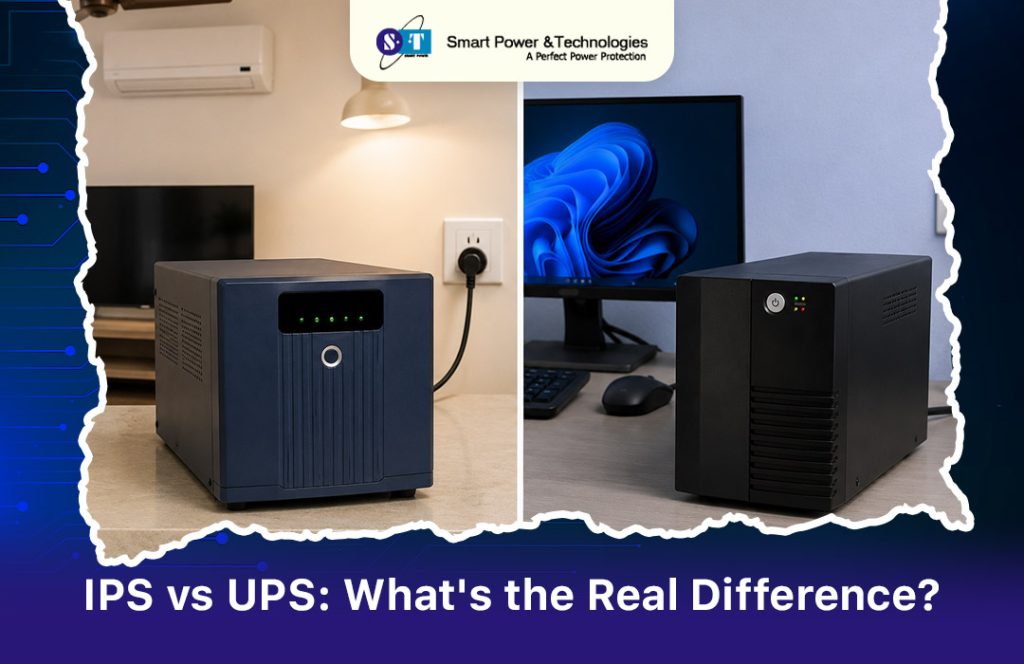
If you have ever shopped for a backup power solution in Bangladesh, you have probably come across two terms used almost interchangeably: IPS and UPS. Many people assume they are simply two names for the same device, but there are important technical differences between them that can affect how well they protect your electronics and appliances during a power outage.
Choosing the wrong device for your needs can mean losing important work, damaging sensitive equipment, or simply wasting money on a solution that does not actually solve your power problem. This guide from Smart Power LTD breaks down what IPS and UPS actually are, how they differ, and how to decide which one is right for your home, office, or business.
What Is an IPS
IPS stands for Instant Power Supply. It is a backup power device commonly used in homes and small offices, designed to automatically switch to battery power when the main electricity supply is interrupted. The key characteristic of an IPS is that it has a short switching delay, typically around half a second to one second, before it takes over and supplies power to connected devices.
IPS units are generally used for essential household appliances such as lights, fans, and televisions, where a brief interruption of a fraction of a second is not a significant problem. You can find detailed specifications and pricing information on the Instant Power Supply (IPS) page.
What Is a UPS
UPS stands for Uninterruptible Power Supply. Unlike an IPS, a UPS is designed to provide power with virtually no interruption at all. When the main power supply fails, a UPS switches to battery power almost instantly, often within milliseconds, ensuring that connected devices continue running without any noticeable disruption.
This makes UPS units especially important for sensitive electronics such as computers, servers, medical equipment, and other devices where even a momentary loss of power could result in data loss, system crashes, or equipment damage. Smart Power LTD offers a range of UPS solutions, including the Online Sine Wave UPS for maximum protection and the Quasi Sine Wave Home UPS for more budget-friendly home use.
The Real Difference Between IPS and UPS
While both IPS and UPS serve the same basic purpose of providing backup power during an outage, the real difference lies in how they switch and what kind of devices they are best suited to protect.
Switching Time
The most significant technical difference is switching speed. An IPS takes a noticeable amount of time, generally around half a second to one second, to switch from mains power to battery power. A UPS, on the other hand, switches in milliseconds, making the transition essentially seamless for connected devices.
Type of Devices Protected
Because of this difference in switching time, IPS units are typically used for general household appliances that can tolerate a brief interruption, such as lights and fans. UPS units are used to protect sensitive electronic equipment that cannot afford any interruption at all, such as computers, servers, networking equipment, and medical devices.
Power Quality and Output
UPS systems, particularly online UPS models, tend to offer cleaner and more stable power output compared to standard IPS units. This is important for protecting delicate electronics from voltage fluctuations and power quality issues, not just outright power loss.
Price and Application
IPS units are generally more affordable and are widely used in residential settings across Bangladesh, where the main need is basic backup power for everyday appliances. UPS units, especially online UPS systems, tend to be more expensive but are essential in settings where uninterrupted, high-quality power is critical, such as offices, data centers, and hospitals.
Why the Terms Are Often Used Interchangeably
In Bangladesh, the terms IPS and UPS are frequently used interchangeably in everyday conversation, and many modern IPS systems now incorporate UPS-like features to reduce switching time. This has blurred the line between the two products in casual usage, even though the underlying technology and intended applications remain different. When choosing a device, it is more useful to focus on the switching time, power quality, and intended use rather than the label alone.
How to Choose Between IPS and UPS
Choosing between an IPS and a UPS depends primarily on what you are trying to protect. If your main concern is keeping basic household appliances like lights and fans running during a power cut, an IPS is generally a practical and cost-effective solution. If you need to protect computers, servers, or other sensitive electronic equipment where even a brief interruption could cause data loss or damage, a UPS is the safer choice.
For businesses and offices with a mix of needs, it is common to use IPS for general lighting and appliances while relying on dedicated UPS units for critical computer systems and networking equipment. If you are still unsure which type of stabilizer or backup device suits your setup, it may also help to understand the difference in a related context by reading our guide on the difference between UPS and a stabilizer, since these terms are sometimes confused as well.
Maintaining Your IPS or UPS for Long-Term Performance
Regardless of which system you choose, proper maintenance is essential for reliable performance over time. This includes maintaining the battery correctly and connecting the unit properly to your home or office electrical system. Our guides on how to charge a UPS battery at home and how to connect a UPS to your power supply offer practical, step-by-step advice to help you get the most out of your device.
If you are also dealing with frequent voltage fluctuations in addition to power outages, it is worth reading whether a UPS works as a voltage stabilizer, since voltage instability requires a different kind of protection than a power outage alone.
Why Choose Smart Power LTD
Smart Power LTD has more than 20 years of experience supplying reliable power solutions across Bangladesh, including generators, IPS, UPS, voltage stabilizers, and substation equipment. Our team does not just sell products. We also provide installation, maintenance, and repair services to ensure your backup power system continues to perform reliably for years. You can learn more about our full range of offerings on the Our Services page, and about our company history and manufacturing capabilities on the Profile page.
For readers comparing multiple UPS options before making a decision, our guide to the top UPS brands in Bangladesh provides a useful overview of trusted names in the market.
Get Expert Advice Before You Buy
Choosing between IPS and UPS does not have to be complicated once you understand what each device is actually designed to do. The right choice depends on the specific appliances and equipment you need to protect, your budget, and how critical uninterrupted power is for your daily operations.
If you are still unsure which option is right for your home, office, or business, our team at Smart Power LTD is ready to help you evaluate your power needs and recommend the right solution. Visit our Contact page or reach out today to get a free quote and expert guidance tailored to your specific requirements.